




Whistler is not only a winter destination. In summer, the journey can combine Howe Sound, one considered Sea-to-Sky stop and a single Whistler experience chosen for your group's pace.
Is Whistler worth visiting in summer?
Absolutely. Snow sports may define Whistler's winter image, but summer changes the scale of the place rather than emptying it. The village becomes a pedestrian base for alpine sightseeing, hiking, biking, lakes, patios and cultural visits. The mountains are still the visual anchor; now the foreground is green, the valley is easier to explore on foot, and a family can build a satisfying day without putting on skis.
The mistake is trying to treat a day trip like a three-day holiday. A route with two major corridor attractions, a long lunch, an alpine ticket, a lake and a museum may look efficient on a map. In practice, parking, queues, weather and walking time can turn it into a sequence of departures. A better summer Whistler day protects space for the experience you came for.
Picture the day: the city falls away
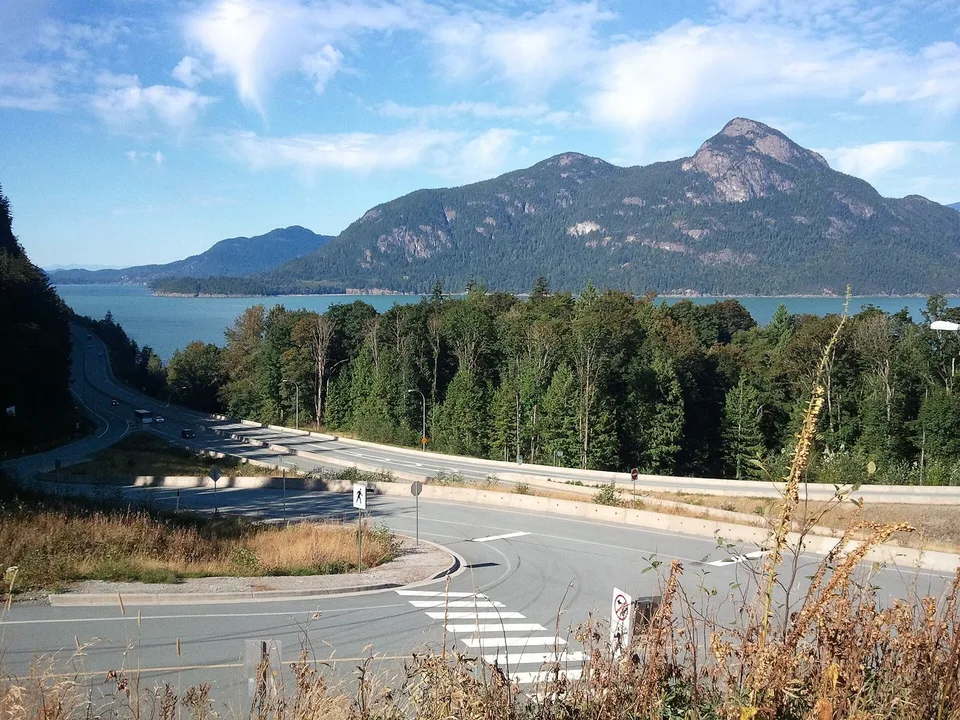
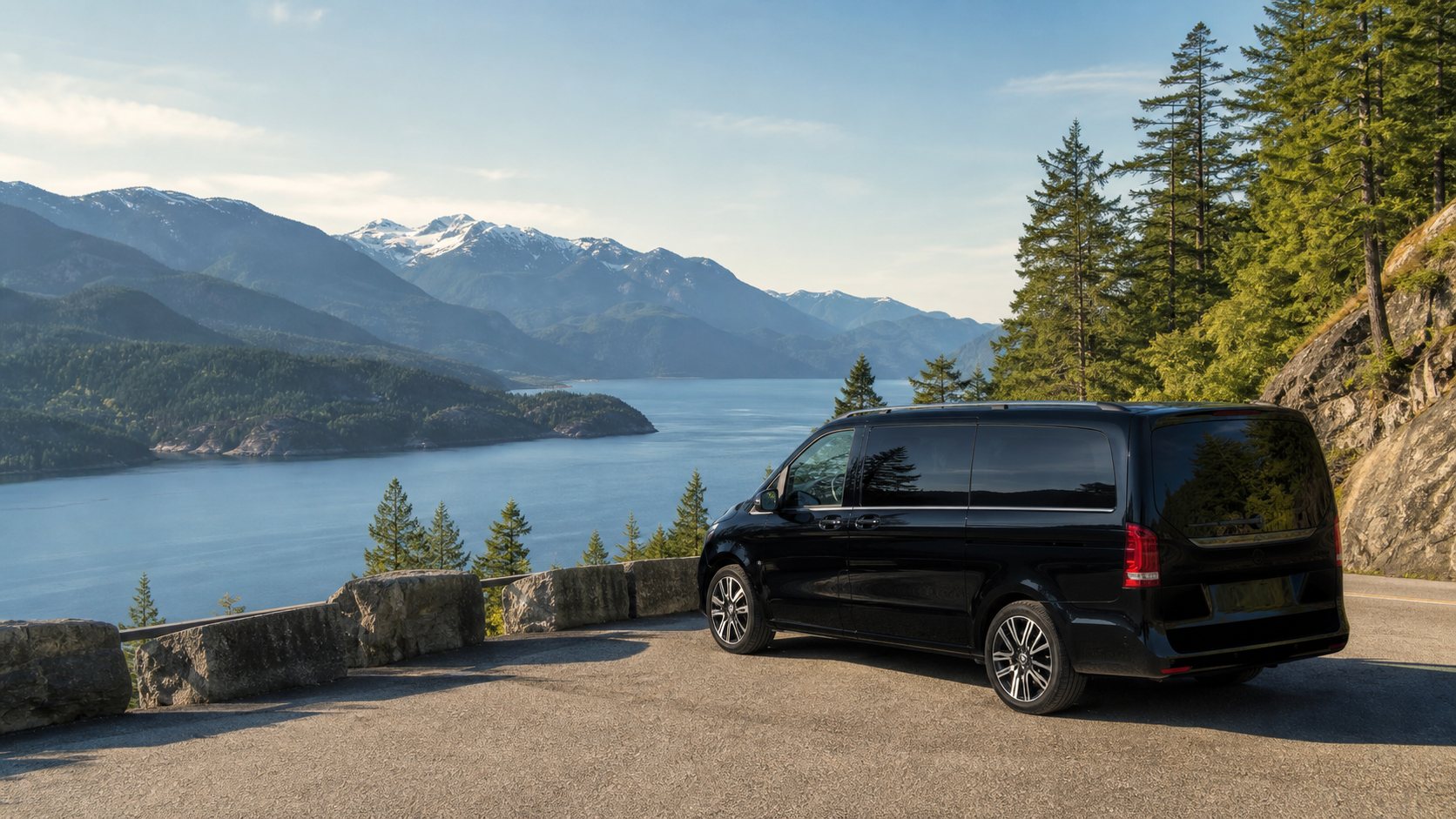
Imagine a confirmed morning pickup in Vancouver. Once the group is together, the day begins without a rental counter, a parking plan or a debate about who will drive home. The city gradually gives way to forest and exposed rock. As Highway 99 runs north beside Howe Sound, islands, water and the Coast Mountains move across the windows.
This is where private transportation changes the feeling of the day. The road is no longer dead time between two attractions. Everyone can look outward. Parents can stay in the same conversation as their children. Friends can compare plans for the afternoon. On the return, the person who would have driven can rest with the rest of the group. None of that makes the highway shorter; it simply gives the travel time back to the passengers.
Tourism Whistler's current road guidance uses roughly two to two and a half hours as a Vancouver–Whistler planning window. Traffic, construction, incidents and substantial stops can change it, so check DriveBC on the travel date and keep timed activities realistic.
The formula for a good summer day
One Sea-to-Sky stop
Breaks up the northbound journey and gives the corridor its own moment.
Leave out: a second major paid attraction on the same drive.
One Whistler anchor
Lets the day feel purposeful: alpine views, culture, or a slow valley experience.
Leave out: two activities with fixed check-in times.
One flexible block
Creates room for lunch, the Village Stroll, photos or a weather change.
Leave out: a minute-by-minute itinerary.
That structure also makes conversation with VanLimo more useful. Instead of asking for “everything in Whistler,” name one non-negotiable experience and one optional stop. The team can then confirm what the current product, road conditions and operating calendar realistically allow.
Northbound on the Sea-to-Sky: choose one meaningful stop
Option 1: Shannon Falls for a shorter forest-and-waterfall pause
BC Parks places Shannon Falls directly beside Highway 99, about 58 kilometres north of Vancouver and two kilometres south of Squamish. The water drops 335 metres, and an easy 350-metre designated trail follows Shannon Creek through coastal forest to the viewing area. It can work well when Whistler itself is the priority.
It is still a real outdoor stop, not a roadside photo guarantee. Walkways, rocks and water edges can be slippery; visitors should remain on the trail and inside the viewing area. Parking and access can also change. Any stop must be part of the confirmed itinerary rather than an assumption made after departure.
Option 2: Sea to Sky Gondola as the day's first major experience
The Sea to Sky Gondola offers summit walking loops, cantilevered viewpoints, hiking and the approximately 100-metre Sky Pilot Suspension Bridge. This is not a quick substitute for Shannon Falls: it deserves a meaningful block of time, and the operator recommends buying tickets online in advance.
If the gondola is your corridor anchor, simplify Whistler. Choose an easy village lunch and one low-pressure activity rather than trying to add another mountain ticket. Confirm current hours, visibility and ticket terms before leaving Vancouver.
Arriving in Whistler: choose the version that fits your group
1. The alpine-views day
For first-time visitors who came to feel the height of the Coast Mountains, make summer sightseeing the central reservation. For 2026, Whistler Blackcomb currently lists Whistler Mountain summer sightseeing from May 16 to September 20 and PEAK 2 PEAK operations from May 16 to September 7. Dates, lift status and last-upload times can change with weather and conditions, so use the live operating page rather than relying on an old itinerary.
Build the day around the ticket. Arrive with enough margin to orient yourself in the pedestrian village, eat without rushing, and reach the upload point before the final recommended time. Bring layers and sturdy footwear: alpine conditions can feel very different from the valley. On a clear day, the reward is scale—forested slopes below, peaks extending beyond the village, and time to look instead of simply documenting that you arrived.
2. The family-and-culture day
Not every group wants a lift ticket or a demanding trail. The Squamish Lil'wat Cultural Centre presents the cultures of the Squamish and Lil'wat Nations through exhibitions, tours, food and art. The Audain Art Museum focuses on art from British Columbia in an accessible building near the village. Either can become the main activity on a rainy, smoky or lower-energy day.
Choose one, check its calendar for your date, and leave room for the Village Stroll. This version is especially useful for multigenerational groups because it provides a shared centre without requiring every traveller to have the same fitness or appetite for heights.
3. The slow-summer day
For travellers who want Whistler to feel like a holiday rather than a checklist, keep the plan close to the valley. Walk a manageable section of the car-free Valley Trail, spend time near a lake or park, then return to the village for lunch. Popular park parking can be limited, so access and the drop-off plan still need checking.
The slow version is not the “lesser” itinerary. It is often the one that leaves space for the scent of the forest after shade, cold lake air on a warm afternoon, and an unhurried conversation over coffee. If a group has already spent several days sightseeing in Vancouver, that change of pace may be exactly why Whistler is worth the trip.
A realistic planning sequence
- Morning: confirmed pickup in Vancouver and a direct northbound start before the busiest part of the day.
- Sea-to-Sky: one pre-confirmed corridor stop—usually Shannon Falls for a shorter pause or Sea to Sky Gondola for a major attraction.
- Midday: arrival, orientation and lunch in or near the village.
- Afternoon: one anchor experience: alpine sightseeing, culture, or a slow valley plan.
- Buffer: uncommitted time for weather, a longer meal, photos or a change in group energy.
- Return: leave while the day still feels complete, not after every person has run out of energy.
These are planning windows, not promised pickup or arrival times. The final order depends on Highway 99, the current product, ticket slots, operating hours and the written itinerary confirmed before payment.
Tour or transfer? They are not the same product
A private sightseeing day and a point-to-point transfer solve different problems. If you want a planned Sea-to-Sky stop and time in Whistler before returning to Vancouver, review VanLimo's Full Day Private Tour of Whistler & Shannon Falls and confirm the current itinerary, inclusions and terms.
If your goal is simply to travel from a downtown Vancouver pickup to Whistler, use the separate Downtown Vancouver to Whistler transfer. Do not assume a transfer includes sightseeing, guiding or discretionary stops. Travellers starting at YVR should use the dedicated airport-to-Whistler transport guide before choosing.
What private transportation changes—and what it does not
The strongest benefit is not speed. It is continuity: the group starts together, stays together and avoids assigning one traveller the work of navigating, parking and driving back. A confirmed pickup and route can also be planned around one important third-party reservation.
Private transportation does not control traffic, weather, wildfire smoke, lift closures or attraction capacity. It also does not automatically include admission, meals, guiding, a particular vehicle, luggage capacity or additional stops. Confirm those details in writing before payment. This distinction keeps the promise useful and makes the actual day easier to trust.
What to reserve and pack
- Reserve separately unless confirmed: Whistler Blackcomb sightseeing, Sea to Sky Gondola, museums, adventure activities and restaurant bookings.
- Pack for changing elevation: layers, water, sun protection and footwear appropriate for the selected activity.
- Check on the day: DriveBC, lift or attraction status, weather, air-quality or wildfire advisories, and any park notice.
- Tell VanLimo before booking: pickup, date, group size, mobility needs, luggage, one must-do experience and any fixed ticket time.
When an overnight stay is the better answer
Choose an overnight stay if your priority is a long alpine hike, two timed adventure activities, a late event, several unhurried meals or a very slow multigenerational pace. A day trip is strongest when the group can agree on one anchor. Saying “not today” to the rest is not missing Whistler; it is what allows the chosen experience to feel like a holiday.
Summer Whistler day-trip questions
Is Whistler still worth visiting without snow?
Yes. Summer brings alpine sightseeing, hiking, biking, lakes, village time and cultural venues. Availability changes through the season, so choose by date and current operations rather than assuming every activity runs every day.
How long should I allow from Vancouver?
Tourism Whistler's road-planning guidance uses roughly two to two and a half hours before substantial stops, but traffic and road conditions can add time. A private day tour also needs time for the return, meals and the selected activity.
What is the best Sea-to-Sky stop for a day trip?
Shannon Falls is usually the more compact choice. Sea to Sky Gondola is a larger paid experience and should replace—not simply accompany—another major attraction. Access, safety and the actual stop must be confirmed for your date.
Can we do PEAK 2 PEAK on a Vancouver day trip?
It can fit when it is the main Whistler anchor and the group arrives with a suitable ticket and time margin. Check live lift dates, status and last-upload guidance before travel.
Are attraction tickets included?
Do not assume so. Admissions, meals and third-party activities are separate unless the current booking page and your written confirmation expressly include them.
Should we book a tour or a transfer?
Book a sightseeing tour when the day includes planned visitor experiences and a return itinerary. Choose a point-to-point transfer when the objective is transportation to Whistler. Confirm stops, pickup, vehicle and terms before paying in either case.
Continue planning
If this is your first visit, read 10 things to know before a Whistler trip. If you are still choosing your main activity, compare the Whistler experiences worth prioritizing. These pages answer different decisions so you can arrive at the booking page with a route that is already realistic.
Road, weather, wildfire, access, ticket and operating conditions can change. Confirm the current itinerary, vehicle, inclusions and booking terms with VanLimo, and verify third-party details with the linked official operator before travelling.
Sources and current trip checks
- Tourism Whistler — Getting Here by Road — current road-planning context and typical Vancouver–Whistler travel window
- BC Parks — Shannon Falls Park — location, 335-metre waterfall, designated 350-metre trail and safety guidance
- Sea to Sky Gondola — Summer Activities — summit walks, viewpoints, suspension bridge and advance-ticket guidance
- Whistler Blackcomb — Hours of Operation — 2026 summer alpine dates, live lift status and weather-dependent operations
- Tourism Whistler — Know Before You Go in Summer — seasonal planning, weather, advance reservations and responsible travel
- Squamish Lil'wat Cultural Centre — Visit — current admission, access and visit-planning information
- Audain Art Museum — Hours and Information — current hours, accessibility and visit-planning information
- DriveBC — live Highway 99 road conditions and advisories